DE
 HU
 EN


With four people, the “we’ll sort it out when we get there” approach can still work quite well. With eight to twelve, however, several small decisions start overlapping: who sleeps with whom, who arrives when, when everyone eats, and what happens if half the group still wants to chat in the evening while the other half is ready for some quiet.
Travelling with a larger group does not have to be complicated – it simply works on a different scale. A few things are worth agreeing in advance so that organising does not take over once you arrive. Everything else can still be spontaneous.
If you are still choosing where to stay, it is worth first reading our guide on how to choose accommodation for a larger group. Once the place is settled, the next question is how to make travelling together with 8–12 people feel easy.
1. Decide before you leave what would only cause unnecessary discussion on arrival
In a group of 8–12 people, different needs are almost guaranteed. Couples, families, young children, early risers, night owls, light sleepers – and, of course, a few people who genuinely do not mind which room they sleep in as long as there is a bed and coffee in the morning.
The organiser does not need to send everyone a detailed questionnaire. It is enough to clarify a few simple things in advance: who would like to share a room, whether anyone needs a quieter place to sleep, and whether different daily routines mean that certain people would be better off not staying next door to each other.
From there, you can put together a simple preliminary room plan. It does not have to be set in stone; think of it as a useful starting point. It is much nicer to adjust it after arrival than to begin deciding where everyone sleeps while the suitcases are already piling up around you.
A good room plan does not only show where everyone fits – it also considers how everyone can genuinely rest.
This matters particularly when travelling with 8–12 people. The number of beds alone does not tell you how comfortable the stay will be. The aim is not military precision, but the exact opposite: less organising once you are there.
2. Several cars, several arrival times – let one person coordinate
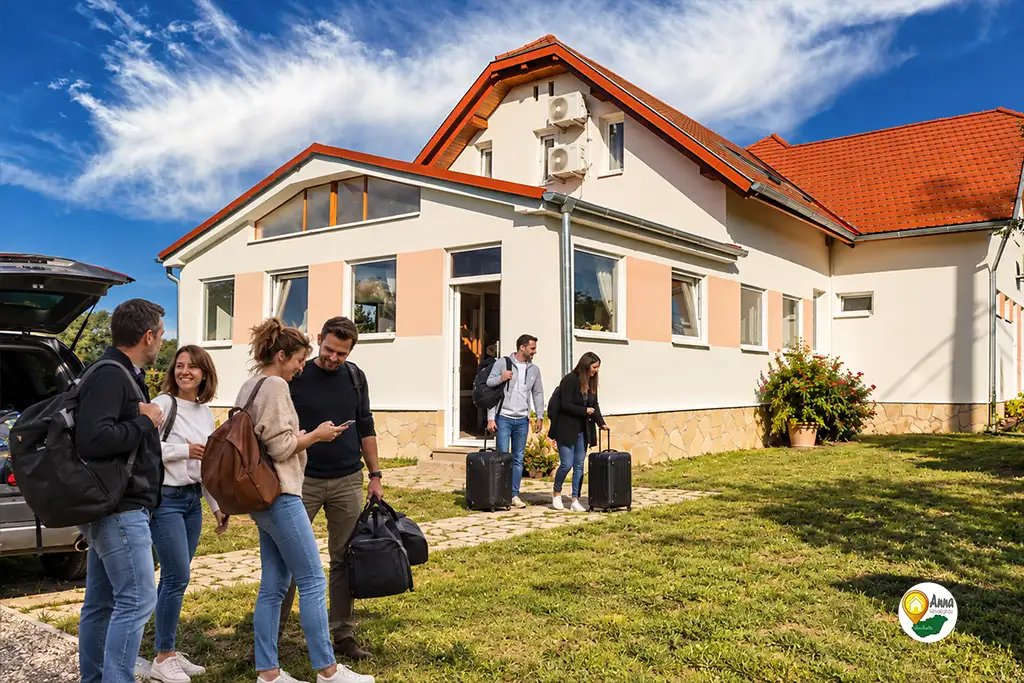
Three or four cars rarely arrive at exactly the same time. Someone sets off earlier, someone stops along the way, and someone else sends a message at the last minute to say they will be half an hour late. That is completely normal – but there is little point discussing the same thing in four different message threads.
The easiest solution is to choose one person as the main contact. They know roughly when everyone is arriving, and if something changes, they can coordinate with the host. It does not make the trip more rigid; it simply means everyone knows where the information comes together.
Parking and general arrival details are always worth checking in advance. We have collected the most useful points in our guide to practical guesthouse arrival information. That way, the arrival of the first car does not become the beginning of another round of organising.
The more people travel together, the more valuable one clear communication channel becomes.
3. Breakfast and dinner: share the jobs instead of leaving everything to the organiser
With a larger group, a shared meal can easily begin with “someone will take care of it”. Then the same person ends up shopping, unpacking, laying the table, cooking and washing up – and by the time everyone else sits down, they would rather just stare quietly into the distance.
There is no need to turn the weekend into a project-management exercise. In the morning, people naturally get up at different times anyway. For dinner, it is usually enough for two or three people to prepare the food, someone else to lay the table and another person to sort out the drinks. The point is not to create a task chart, but to make sure the organiser does not automatically become the entire group’s support staff.
If you are staying for several days, shopping, packing and preparing in advance also become easier when everything does not have to be worked out the night before you leave. Our guide on how to prepare for a longer stay in Szeleste can help with that.
Good organisation provides a framework rather than a set of rules. Once everyone knows what they are expected to help with, it becomes much easier to relax and enjoy the day.
4. Spend the evening together – without expecting everyone to follow the same rhythm
This may be the biggest difference between travelling as a small group and travelling with eight to twelve people. With a group this size, it is completely natural that not everyone wants the same thing in the evening. Some people may still want to talk, others would rather retreat for some quiet, someone needs an early night, while the rest of the group has not even decided what to do the following day.
Tension starts when a group trip is organised as though everyone has to follow exactly the same rhythm from morning to night. They do not. You can have dinner together, share activities and enjoy a long evening conversation while still leaving room for people to rest separately or split into smaller groups.
A larger group does not work well because everyone does everything together. It works well when being together still feels good even when you are not all doing the same thing.
That is why it helps to plan a few shared points rather than a programme organised minute by minute. The best weekends leave room for someone to turn in early, someone else to keep chatting, and perhaps two smaller groups to choose different activities the next day. The group is not falling apart – it is simply getting a little breathing space.
5. When the accommodation itself makes spending time together easier
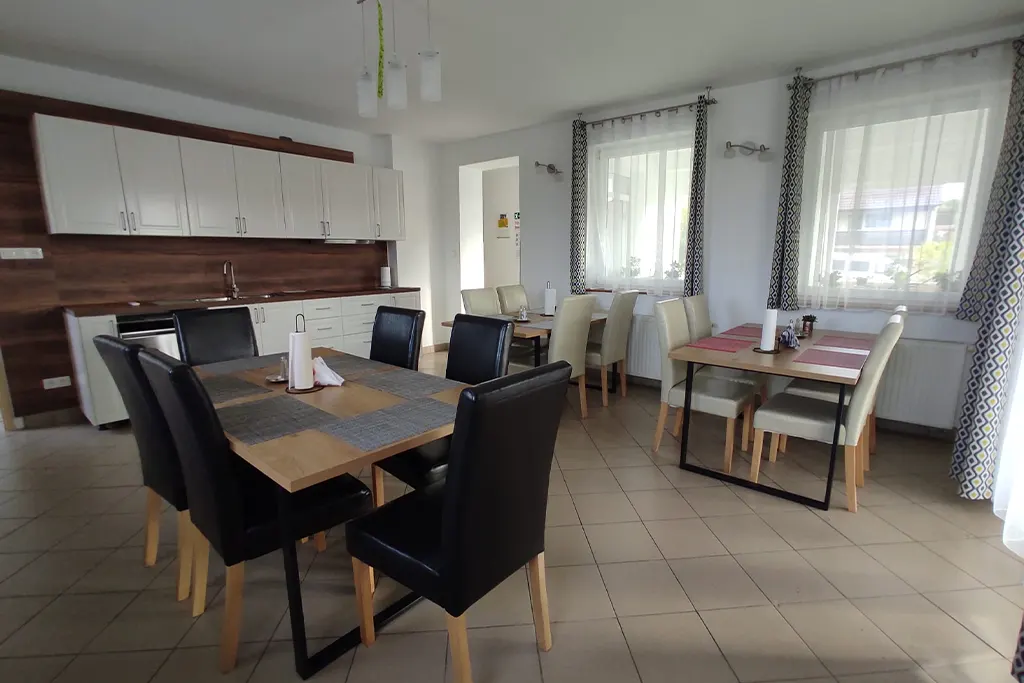
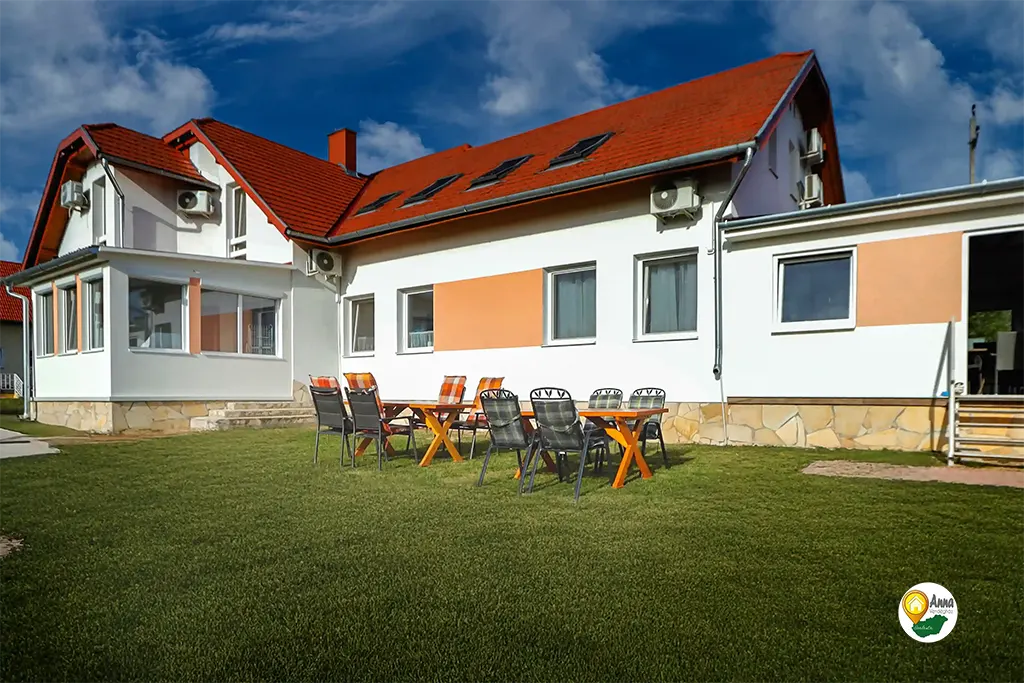
On a trip with 8–12 people, it makes a real difference when the accommodation does more than simply provide enough beds. It also needs to give you some flexibility for spending time together and apart. Anna Guesthouse in Szeleste has 6 rooms and a capacity of 24 guests. Each room has its own bathroom, and shared spaces and a well-equipped kitchen are also available.
Parking is available, and the details of a group arrival can be discussed in advance. Renting the entire house is also possible, but this does not mean that every booking for 8–12 guests automatically includes exclusive use of the whole property. This should always be clarified for the particular dates and requirements of your group.
If you would like to see how the house is arranged and what it can offer a larger group, take a look at the Anna Guesthouse visitor information page. The peaceful surroundings of Szeleste in Vas County can provide a good setting for a weekend where the focus stays on the people you came with rather than on the logistics.
In short: clarify a few things and leave the rest flexible
If you are travelling with 8–12 people, you do not need to organise every detail in advance. It is enough to have the basics clear: room allocation, arrival, shared meals and the fact that people may follow different evening routines. These are the points that can save the most unnecessary discussion once you are there.
There is no reason to over-organise the shared programme. Part of what makes a weekend with a larger group enjoyable is having plenty to experience together while still keeping some freedom for everyone.
Planning a trip for 8–12 people?
If you already have an idea of your group size and dates, take a look at the current rates and booking options. If you would like to discuss room allocation, arrival or a particular requirement for your group, simply get in touch and we can clarify the details.
Rates & Booking Contact